
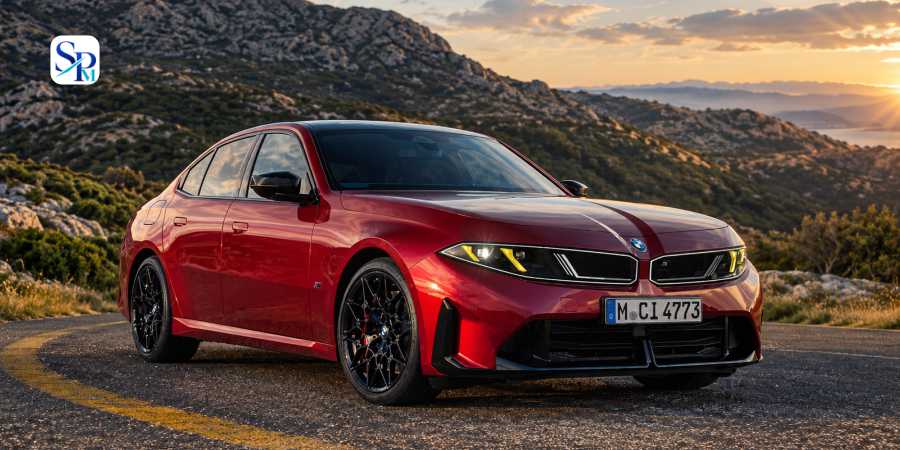
The 2027 BMW 3 Series arrives at a significant point in BMW’s history. The nameplate has spent more than five decades establishing itself as the brand’s defining sport sedan, but the eighth-generation G50 is not simply a styling refresh of the outgoing G20. BMW has redesigned the car around a new digital experience, a broader powertrain strategy, updated mild-hybrid engines, and a design language derived from its Neue Klasse program. The result is a 3 Series that attempts to preserve the familiar driving character while moving the model into a very different technological era.
The comparison with the 2026 model is therefore more interesting than a conventional year-to-year update. The outgoing car represented the mature version of the seventh-generation formula, while the 2027 BMW 3 Series introduces a completely new generation. BMW has also taken an unusual approach to electrification: rather than simply offering an electric version on the same architecture, the company is positioning the new BMW i3 as the fully electric member of the 3 Series family, while gasoline versions continue with their own architecture and 48-volt mild-hybrid systems.
A Much More Dramatic Design Change
The most immediate difference between the 2027 BMW 3 Series and its predecessor is the exterior. The G50 adopts BMW’s Neue Klasse design language, bringing cleaner surfaces, a more upright interpretation of the kidney grille, horizontal lighting elements and a modern version of the classic shark-nose profile. BMW has deliberately carried similar visual cues across the electric i3 and gasoline-powered 3 Series so that the two cars look like members of the same family rather than completely separate products.
The proportions remain recognizably BMW, but the new car is slightly larger and has wider front and rear tracks. Flush-fitting door handles, more sculpted wheel arches and a cleaner body treatment replace some of the visual complexity of the previous generation. The approach is particularly important because BMW is trying to make its electric models visually familiar rather than giving them an entirely separate identity. MotorTrend’s reporting on the new sedan notes that BMW wants its EVs and combustion-powered vehicles to share a common design language as electric mobility becomes more mainstream.
The Interior is Where the Bigger Revolution Happens
Step inside the 2027 BMW 3 Series, and the difference becomes even more obvious. The previous model relied on BMW’s established digital cockpit, while the new generation adopts Panoramic iDrive and BMW Operating System X. A 17.9-inch central display sits beside BMW Panoramic Vision, which projects information across the lower portion of the windshield. An optional 3D Head-Up Display adds another layer of information directly within the driver’s line of sight.
BMW has not completely abandoned physical controls, which is an interesting response to the criticism that modern cars can become overly dependent on touchscreens. The center console retains physical controls for functions including the parking brake, hazard lights and audio volume. The new multifunction steering wheel also incorporates haptic controls, while wireless Apple CarPlay and Android Auto are standard. BMW’s Intelligent Personal Assistant gains more natural voice interaction through Amazon Alexa+ technology, allowing the system to respond to conversational commands rather than requiring rigid phrases.
The Engines Change Without Abandoning Gasoline Power
One of the defining characteristics of the 2027 BMW 3 Series is that BMW has not treated the eighth generation as an all-electric replacement. The launch gasoline range consists of the 330, 330 xDrive and M350 xDrive, all using 48-volt mild-hybrid technology. The standard 330 continues with a 2.0-liter turbocharged four-cylinder producing 255 horsepower and 295 lb-ft of torque, while the M350 xDrive moves to a 3.0-liter inline-six producing 437 horsepower and 428 lb-ft.
That represents a substantial change at the top end. The outgoing M340i produced 386 horsepower, while the new M350 adds 51 horsepower. BMW says the M350 xDrive can reach 60 mph in 3.9 seconds, uses an eight-speed automatic transmission and incorporates an electric motor within the transmission as part of its 48-volt system. The model also introduces a Drift Moment function that can direct power toward the rear wheels for controlled performance driving.
The four-cylinder models also receive more than a cosmetic update. BMW has revised the engines with its latest TwinPower Turbo technology, Valvetronic variable valve control and Miller-cycle combustion. The mild-hybrid system can recover energy and provide additional assistance during acceleration, while BMW says changes to the combustion and intake systems are intended to improve both efficiency and response.
The Electric i3 Changes the Meaning of the 3 Series Family
Perhaps the most consequential change surrounding the 2027 BMW 3 Series is the arrival of the new BMW i3. It is not the quirky compact electric hatchback that carried the i3 name previously. Instead, the new i3 is a midsize electric sedan positioned as the battery-powered counterpart to the gasoline 3 Series and built on BMW’s Neue Klasse architecture.
The launch i3 50 xDrive uses two electric motors and produces 463 horsepower and 476 lb-ft of torque. BMW estimates a 446-to-468-mile EPA range depending on configuration, while its 800-volt electrical architecture supports charging at up to 400 kW. BMW says up to 208 miles of range can be added in 10 minutes under suitable charging conditions. The car also uses sixth-generation eDrive technology, cylindrical battery cells and a cell-to-pack construction that raises volumetric energy density by 20 percent compared with the company’s previous-generation prismatic-cell technology.
More Technology, More Size, and More Performance
The 2027 BMW 3 Series also grows physically compared with the outgoing sedan. Car and Driver reports a length of 187.2 inches, a width of 72.8 inches, a height of 57.3 inches and a 112.6-inch wheelbase for the new gasoline model. That extra size is paired with wider tracks and revised chassis tuning intended to retain the planted handling associated with the 3 Series.
Driver assistance is another area where the new generation moves forward. BMW offers an SAE Level 2 system with hands-free highway assistance capable of operating at speeds up to 85 mph under the appropriate conditions. The technology is integrated with BMW’s navigation and display systems, allowing assistance information and the surrounding road environment to be represented together.
Pricing also moves upward, although not dramatically at the entry level. BMW lists the 2027 330 at $49,900 before the $1,350 destination and handling charge, while the 330 xDrive starts at $51,900 and the M350 xDrive at $65,900. The electric i3 50 xDrive starts at $61,500 before destination charges.
What the New Generation Means for the 3 Series
Ultimately, the 2027 BMW 3 Series changes much more than the exterior shape of BMW’s familiar sedan. It introduces a new cabin concept, a substantially more digital operating system, stronger mild-hybrid gasoline engines and a separate electric architecture represented by the i3. At the same time, BMW has retained rear- and all-wheel-drive configurations, an inline-six at the top of the conventional range and a clear focus on handling.
That balance may be the defining idea behind the 2027 BMW 3 Series. Rather than forcing every customer toward one type of propulsion, BMW is offering different technical routes within the same family. The gasoline cars preserve the traditional formula, while the i3 pushes the nameplate into the Neue Klasse era. The eighth generation therefore feels less like a replacement for the previous 3 Series and more like a bridge between BMW’s established performance identity and the company’s software-heavy, electrified future.