Strengthening Digital Trust: How Cybersecurity Services Are Transforming Business Protection
Digital transformation has redefined the working of the organization, its communication process, storing of information, and the way the company services its customers. Companies now need interconnectivity, cloud technologies, digitization of processes and information, and data-driven processes to keep themselves competitive. While these transformations provide many possibilities, they also present security risks that should be considered. Protection of the digital infrastructure is not an IT department task anymore, it is a basic business function.
Cyber threats continue to evolve and become more complicated. Today criminals often use such ways to steal confidential information as phishing, ransomware, identity theft, social engineering, and hacking. Even the smallest security problem can interrupt the company’s activity, reveal confidential information, ruin relationships with customers, and result in huge financial losses. This situation requires companies to develop cybersecurity services.
There are other reasons to pay special attention to the company’s security because protecting from cybercrime is not the only reason why the company needs protection. It is important to develop systems that would be able to recognize the risks, react to them and ensure smooth functioning of the company.
Moving Beyond Traditional Security Practices
Traditional approaches to security used to focus on securing networks using firewalls, anti-virus programs, and simple access controls. While these strategies are still applicable in the modern digital world, there is a need for something more advanced. Staff members work remotely, applications function in several clouds, and company data is transferred between various platforms. Security cannot be achieved with just one layer of protection anymore.
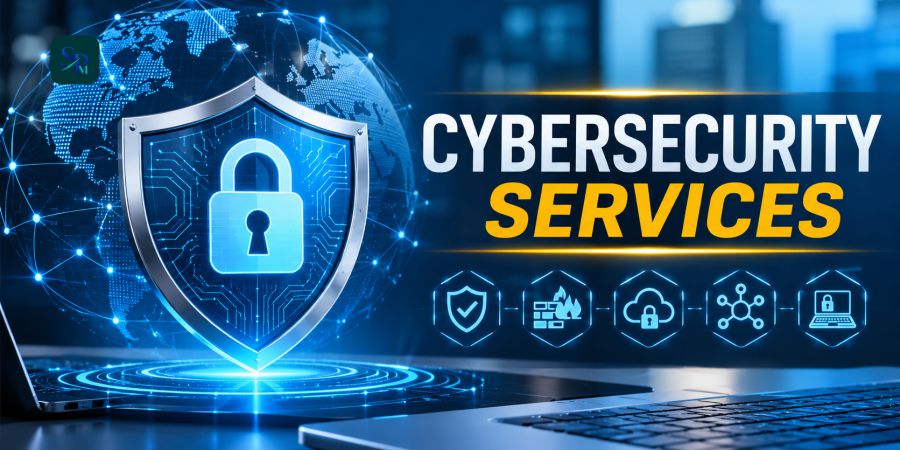
Current solutions include cybersecurity services that are aimed at conducting risk assessment, monitoring the network, managing vulnerabilities, protecting endpoints, and educating staff about cybersecurity matters. Such measures will enable organizations to gain insight into the digital environment and limit the possibilities for cybercrime.
The next emerging trend in terms of cybersecurity concerns the importance of identity management. Since companies use distributed working arrangements, it is crucial to verify the people who have access to sensitive data. Multi-factor authentication and identity verification play an important role in ensuring that only legitimate users can access information.
The Growing Importance of Continuous Threat Monitoring
Cybersecurity is an ongoing process; threats change constantly, and vulnerabilities arise whenever an organization uses a new technology, updates its application, or changes operations. Thus, visibility into the digital environment is critical for any company.
By using cybersecurity services, businesses can use continuous monitoring solutions to analyze network traffic and behavior, and to detect any access attempts. SIEM software and XDR solution can help security analysts to find correlations between events and to investigate incidents more effectively.
AI and machine learning have also become an important tool in threat detection. This technology analyzes huge amounts of information and finds patterns of behavior, which could be used to detect possible problems. However, an automated system must work together with security analysts who will understand the findings and take action.
The point is not only to identify the attack after it has happened. The goal is to find any signs of the problem, to limit the exposure and to decrease time spent on investigation.
Protecting Business Data in an Interconnected World
The value of data has increased significantly to become one of the most valued resources in today’s organizations. Customer data, financial data, intellectual property data, employee data, and strategic business data all need proper protection. Data breaches may not only affect the organization that suffers from the data breach but may also harm customers, suppliers, business partners, and others.
Cybersecurity services pay much attention to the protection of data through its encryption, proper access control, proper backup procedures, data loss prevention, and proper information classification. This helps organizations to understand which information needs additional protection and how it should be managed.
Another aspect of information security that was introduced with the development of cloud computing is cloud adoption. While cloud platforms bring a lot of benefits such as flexibility and scalability, there are certain information security risks that businesses should consider when using third-party infrastructure to store and process information.
Businesses need to check the configuration of the cloud environment, implement proper access management, and assess the security of their technology providers. Information protection requires everyone in the ecosystem to be responsible, not just some departments.
Human Awareness as a Critical Security Layer
Technology alone cannot eliminate cybersecurity risks. Human behaviour continues to play an important role in determining how effectively an organization protects its information. Employees who unknowingly open malicious attachments, share credentials, or respond to fraudulent requests can create opportunities for attackers.
This makes security awareness an essential organizational investment. Regular training should help employees recognize suspicious emails, identify social engineering techniques, use secure passwords, and report unusual activities without hesitation.
Well-structured cybersecurity services increasingly incorporate employee awareness programmes and simulated phishing exercises to evaluate how individuals respond to potential threats. Such initiatives should encourage learning rather than create a culture of blame. When employees understand their responsibilities, security becomes a shared organizational commitment.
Leadership also has a significant role to play. Senior executives must establish clear policies, allocate appropriate resources, and ensure that security considerations are included in business decisions. A strong security culture develops when employees at every level understand that protecting information is part of their professional responsibility.
Incident Response and Business Continuity
Even organizations with comprehensive protective measures can experience security incidents. The difference often lies in how quickly and effectively they respond. Without a defined incident response strategy, businesses may struggle to contain an attack, determine its impact, restore affected systems, and communicate with relevant stakeholders.
An effective response framework establishes clear responsibilities, escalation procedures, communication channels, and recovery priorities. It also includes regular testing through simulated incidents and response exercises.
Reliable cybersecurity services support this process by helping organizations prepare incident response plans, investigate security breaches, isolate compromised systems, and restore affected environments. Backup management and disaster recovery planning further strengthen resilience by reducing the risk of prolonged operational disruption.
Post-incident analysis is equally important. Organizations should examine how an incident occurred, identify weaknesses in existing controls, and implement corrective measures. Every security event should provide an opportunity to improve preparedness and prevent similar situations in the future.
Compliance, Accountability, and Digital Trust
Regulatory requirements surrounding data protection and information security continue to influence how organizations manage their digital responsibilities. Depending on their industry and operating locations, businesses may need to comply with frameworks and regulations such as ISO/IEC 27001, GDPR, and applicable national data protection requirements.
Compliance should not be treated as a documentation exercise undertaken solely to satisfy an audit. It should reflect how effectively an organization manages information, evaluates risks, controls access, and demonstrates accountability.
Professional cybersecurity services can help businesses assess their existing security practices, identify compliance gaps, establish governance frameworks, and maintain appropriate documentation. Independent security assessments and periodic audits also provide valuable insight into whether established controls are functioning as intended.
For customers and business partners, strong security practices communicate reliability. Organizations that demonstrate responsible information management are better positioned to establish confidence, protect their reputation, and build lasting professional relationships.
Preparing for the Next Generation of Cyber Threats
The future of cybersecurity will be shaped by emerging technologies, increasingly connected infrastructure, and changing attack methods. Artificial intelligence may improve threat detection and security automation, but it can also introduce new opportunities for malicious actors. Deepfake-enabled fraud, automated phishing campaigns, attacks against connected devices, and vulnerabilities within software supply chains are among the challenges organizations must consider.
Businesses must therefore adopt a flexible security strategy that can evolve alongside technological developments. Regular risk assessments, penetration testing, secure software development practices, and continuous employee education will remain important elements of long-term protection.
Ultimately, cybersecurity services should be viewed as an investment in business resilience rather than an expense associated with preventing technical problems. Their value lies in helping organizations safeguard information, maintain operational stability, protect stakeholder confidence, and pursue innovation with greater assurance.
The digital economy will continue to create new possibilities for businesses, but sustainable growth depends on the ability to manage the risks that accompany technological progress. Organizations that make security an integral part of their strategy will be better equipped to navigate uncertainty, respond to emerging challenges, and build a more trustworthy digital future.