
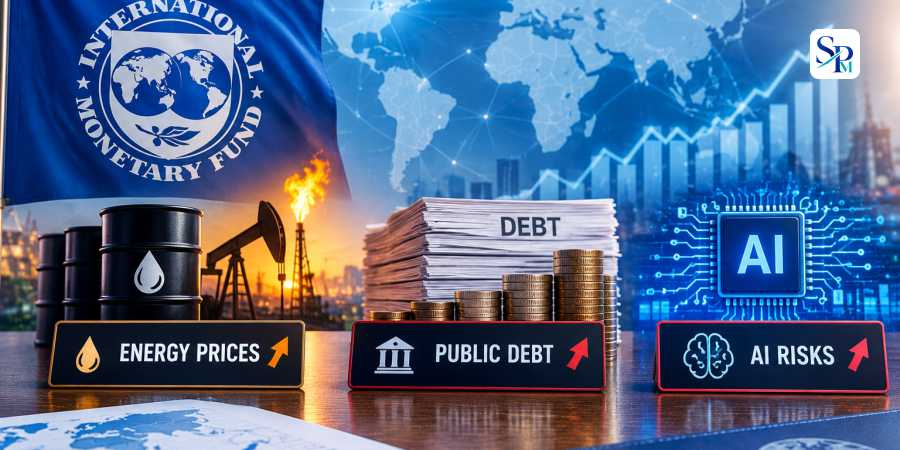
Opportunities and threats arise in the international economy from the increasing cost of energy sources, high borrowing by governments and the rapid development of artificial intelligence, which can influence the business environment. The International Monetary Fund expects that these difficulties might increase the difficulty of sustaining economic growth while controlling inflation and financial risks.
The managing director of the IMF, Kristalina Georgieva, pointed out problems like high pressure of energy prices, government debt and risks of investment into artificial intelligence as some of the difficulties in the world economy.
It means that governments will be required to consider expenditures on healthcare, economic growth, and infrastructure together with servicing of previous obligations. Moreover, high levels of public debt may reduce the ability of governments to make decisions in the future, and in addition to that, companies should pay attention to possible changes in taxes and investments.
As far as artificial intelligence is concerned, this technology promises many possibilities to the business sphere. First of all, it is necessary to mention investments in computer equipment and software, which can provide better results of performance and increase the number of commercial opportunities. However, expectations connected with the application of AI may be higher than financial gains.
These factors could be reinforcing each other. Rising energy prices could reduce the profitability of corporations at a time when high-interest rates raise the cost of borrowing. Firms affected by these two factors might be tempted to defer capital spending and recruitments or abandon expansion plans altogether. Small firms could be vulnerable especially if they have low cash balances or access to affordable finance.
From a management perspective, this environment demands robust financial management. This is because firms will need to analyze their exposure to energy prices, keep debt in check, test investment propositions and retain sufficient liquidity to withstand shocks. AI programs should be tested against operational and financial goals, not just technological considerations.
In terms of policy making, stable economic policies, sound budget planning and consistent regulations will allow firms to plan ahead. However, policymakers need to avoid discounting productive investments that could raise the economy’s productive capacity.
The caution of the IMF indicates the fact that there is a need for managing multiple risks that are interlinked, instead of dealing with each of them as an individual issue. The world’s economic growth depends not only on innovation and demand but also on effective debt management.